Collaborative Cooking and Shared Kitchens: A Friction-First Infrastructure Map for Kitchen Partnerships That Actually Last
1 May 2026 · Updated 6 May 2026
Map the real friction points in shared kitchens before they break your partnership. Build collaborative cooking arrangements that actually last. Start here.
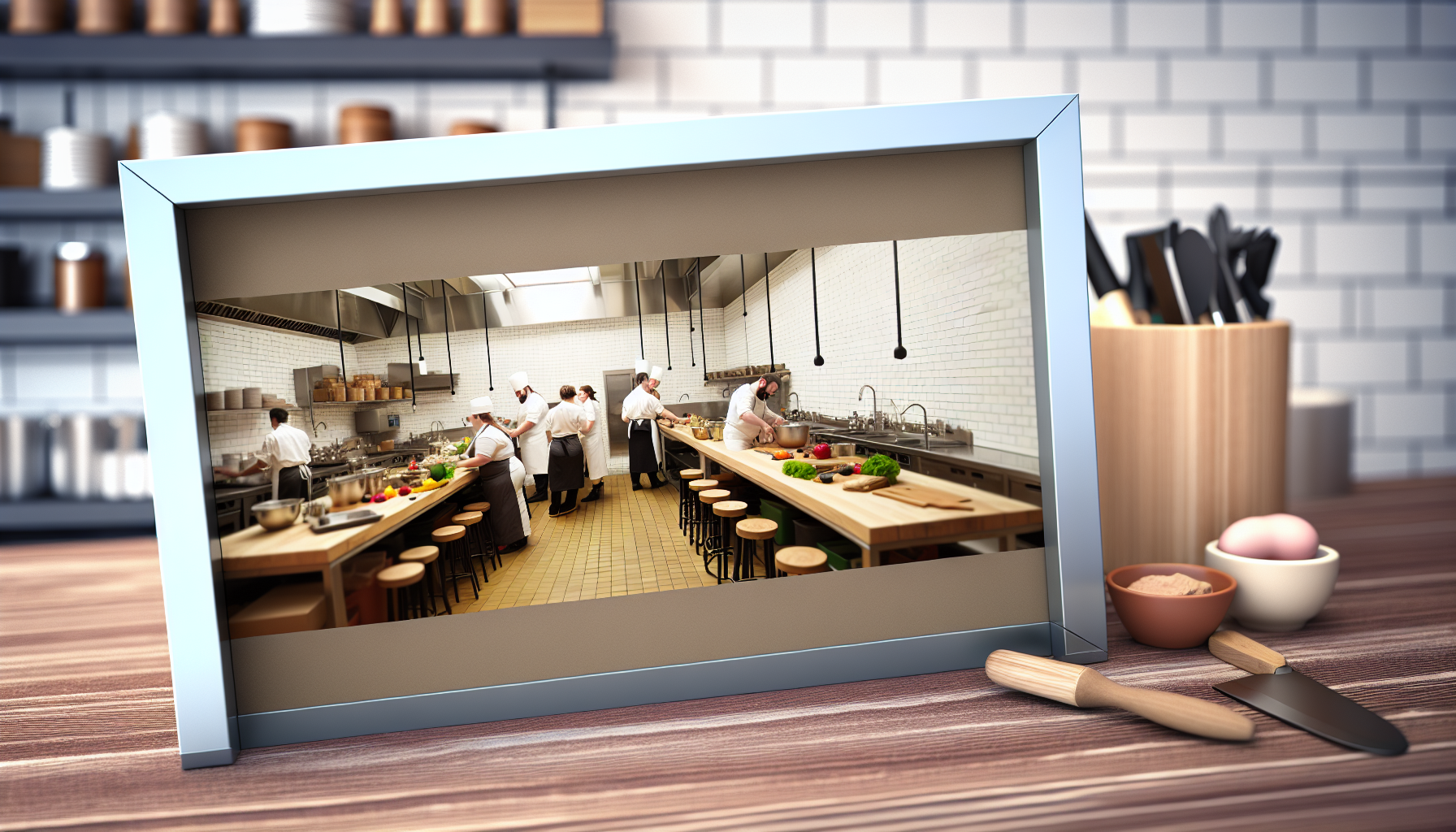
Collaborative Cooking and Shared Kitchens: A Friction-First Infrastructure Map for Kitchen Partnerships That Actually Last
According to the National Restaurant Association, operational disagreements account for the majority of failed kitchen collaborations, not creative clashes. The real work of cooking together happens long before anyone picks up a knife. It happens in the boring decisions about who buys the olive oil, whose dietary restrictions take priority, and what "clean the kitchen" actually means.
Table of Contents
- What Collaborative Cooking Actually Means When You Remove the Romance
- The Shared Kitchen Infrastructure Checklist: What Needs to Exist Before Anyone Cooks
- Co-Chef Communication vs Professional Kitchen Coordination: Where Home Kitchens Break Down
- Pricing Models for Shared Kitchen Subscriptions: A Tradeoff Comparison
- How to Invite a Co-Chef Without Creating a Power Struggle
- Shared Pantry Management: The Quiet System That Holds Everything Together
- Building Community Through Shared Meal Planning, and Where It Gets Complicated
- The Domestic Kitchen Collaboration Readiness Audit is a five-checkpoint diagnostic covering pantry visibility, dietary documentation, scheduling clarity, communication norms, and shared cooking history, and households use it to assess whether their kitchen infrastructure can support collaborative cooking before they start.
Key Takeaways
| Point | Details |
|---|---|
| Infrastructure before inspiration | Collaborations fail on logistics like equipment ownership and scheduling, not creative disagreements. |
| Communication patterns matter more than skill | Professional kitchens use structured call-and-response; home kitchens rarely have any protocol. |
| Shared pantry is the foundation | A pantry both cooks trust reduces waste, duplicates, and quiet resentment over missing ingredients. |
What Collaborative Cooking Actually Means When You Remove the Romance
Collaborative cooking is two or more people sharing the ongoing weight of feeding a household: deciding what to eat, buying what is needed, cooking it, and cleaning up after. Not a curated dinner party. Not a one-night pop-up.
Media coverage frames chef partnerships as a "golden era" of creative fusion. Those stories are real, but they describe events, not routines. In your kitchen, collaborative cooking looks like Tuesday. It looks like someone forgetting to buy onions and someone else making a face at the suggestion of fish.
The friction is not about taste or talent. It is about operations. Who checks the fridge. Who remembers that one person stopped eating gluten. Who decides when leftovers become tomorrow's lunch. These are infrastructure questions, and most shared kitchens collapse not from disagreements about flavour but from gaps in coordination.
This is where the Load Visibility Method matters. Before any collaborative cooking arrangement can hold, both people need clarity on three things:
- Decision load: who picks what to cook, and how often
- Execution load: who shops, preps, and stands at the stove
- Maintenance load: who tracks what is running low, what needs using up, what rules apply
When any of these stays invisible, one person carries it silently. Resentment builds. The collaboration quietly stops being collaborative.
Operational infrastructure, not creative chemistry, determines whether a shared kitchen survives past the first enthusiastic week, making logistics the primary factor in the success or failure of any cooking partnership. The examples of effective co-chef collaboration that actually last tend to look less like a partnership highlight reel and more like a shared system both people trust.
The Shared Kitchen Infrastructure Checklist: What Needs to Exist Before Anyone Cooks
Five layers of infrastructure, shared inventory visibility, dietary rule documentation, scheduling clarity, communication norms, and a shared cooking history, need to be in place before two people can cook together consistently. Professional kitchens solve this with brigade systems and mise en place. Every station has a role, every ingredient has a location, every dietary restriction is documented. Home kitchens typically have none of it.
Here is what a functioning shared kitchen actually requires:
- Shared inventory visibility. Both cooks need to know what is in the fridge and pantry right now, not three days ago.
- Dietary rule documentation. Allergies, preferences, restrictions. Written down once, applied everywhere.
- Scheduling clarity. Who is cooking tonight. Not assumed, not negotiated at 6:45 PM.
- Communication norms. How you say "I changed the plan" or "we are out of onions" without it becoming a larger argument.
- A single source of truth for cooking history. What has been made before, what worked, what did not.
| Infrastructure layer | Professional kitchen | Typical home kitchen |
|---|---|---|
| Inventory tracking | Daily prep lists, walk-in logs | Memory, maybe a grocery app |
| Dietary rules | Allergy charts on the pass | Verbal reminders |
| Cooking history | Standardized recipe binders | Nothing documented |
When a platform supports multiple household members under one subscription, with a shared pantry, shared taste memory, and shared cooking history, both cooks see the same ingredients, the same dietary rules, and the same record of what has been made. That shared context is worth evaluating before choosing any tool, because a solution that only serves one cook at a time leaves the coordination problem unsolved.
Co-Chef Communication vs Professional Kitchen Coordination: Where Home Kitchens Break Down
Home kitchens break down not because the cooks lack skill, but because they lack any shared protocol for communicating while they cook. Professional kitchens survive chaos because every interaction follows a structure: someone calls, someone responds, and the whole line knows what is happening. Home kitchens have none of that.
| Professional Kitchen | Typical Home Kitchen |
|---|---|
| Call-and-response confirms every order heard | One person assumes the other saw the grocery list |
| Stations have defined ownership and handoff points | Both people reach for the same pan, or neither starts rice |
| Dietary restrictions are printed on every ticket | Someone forgets their partner stopped eating dairy last month |
| A head chef coordinates across sections like a department leader aligns with front-of-house | One cook has energy, the other is running on fumes, and nobody negotiates the difference |
| mise en place is non-negotiable prep before service | Prep happens mid-cook, if at all |
In restaurants, collaborating with kitchen staff during busy service works because the system removes ambiguity. At home, ambiguity is the default. You do not announce "behind" when you pass your partner at the counter. You do not confirm you heard the plan for dinner. You just assume, and assumptions breed the low-grade friction that makes people stop cooking together entirely.
The fix is not mimicking brigade hierarchy. A lighter version works: agree on who owns which decisions before cooking starts, and name a single place where both people can see what is available and what the plan is. That structure does not need to be formal to be effective, but it does need to exist.
Pricing Models for Shared Kitchen Subscriptions: A Tradeoff Comparison
Shared kitchen subscription pricing generally lands on one of four models, and each creates a different kind of pressure. A flat monthly fee feels predictable until light users subsidize heavy ones. Hourly rental feels fair until scheduling becomes its own part-time job.
| Model | How It Works | Where It Fits | Where It Breaks |
|---|---|---|---|
| Per-hour rental | Pay only for time used | Occasional users, pop-ups, testing phases | Unpredictable costs; scheduling conflicts multiply fast |
| Flat monthly membership | One price, unlimited or capped access | Steady, frequent users who cook on a regular rhythm | Light users overpay; heavy users strain shared resources |
| Tiered usage plans | Multiple levels with different access limits | Groups with varied needs under one roof | Tier boundaries create friction when someone outgrows a plan mid-month |
| Per-seat household subscription | One subscription covers multiple members | Households or small teams sharing one kitchen context | Value depends entirely on whether members actually use it together |
For home collaborative cooking, the per-seat household model tends to make the most sense when both cooks are genuinely active. Everyone shares context, nobody pays separately, and the cost stays visible. The per-hour model is worth considering when cooking together is occasional rather than routine. Pricing for household-focused tools varies by provider, so checking current rates and trial options directly is the most reliable approach.
How to Invite a Co-Chef Without Creating a Power Struggle
The power struggle starts the moment one person feels like a guest in a kitchen they are supposed to share. Avoiding that means doing alignment work before you hand over access, not after someone cooks a meal that ignores your partner's lactose intolerance.
- Align on dietary rules first. Get every constraint on the table before anything else. Allergies, preferences, things the kids will not touch. When a shared kitchen tool stores these rules at the household level, they apply automatically to every suggestion either cook sees.
- Share pantry visibility. Both cooks need to see the same inventory. Nothing derails a shared kitchen faster than someone buying a second bottle of soy sauce or using the last eggs without anyone knowing.
- Establish who cooks when. Even a loose pattern ("you do Tuesdays, I do Thursdays") prevents the nightly standoff of two people staring at each other over an open fridge.
- Agree on how to handle conflicting preferences. One of you wants spice. The other does not. Name this early.
| Without shared context | With shared kitchen access |
|---|---|
| Each cook starts from scratch every night | Both see the same pantry, history, and dietary rules |
| Preferences get forgotten or overridden | Constraints apply automatically to every suggestion |
| Cooking feels like parallel solo efforts | Decisions build on what the household actually eats |
When a co-chef is invited into a shared kitchen tool with full access, they arrive with context: the same recipes, pantry state, and taste memory the other cook has been building. That shared starting point is what makes the invitation feel like a genuine partnership rather than a handoff of tasks.
Shared Pantry Management: The Quiet System That Holds Everything Together
A shared pantry only works when every person who cooks from it can see what is actually there. In practice, this is the thing most collaborative cooking arrangements get wrong first.
The friction is rarely dramatic. It is small and repetitive: two jars of cumin because nobody checked, a missing can of coconut milk discovered at 7 PM, one cook assuming the rice was restocked. These tiny gaps erode trust in the system, and once trust goes, people start buying their own supplies. That is the quiet death of any shared kitchen.
- Duplicate purchases. Both cooks buy the same thing because neither can see current stock. Fix: a single, shared inventory that updates when either person cooks or shops.
- Invisible gaps. A staple runs out and nobody flags it until someone needs it mid-recipe. Fix: automatic gap detection that notices when something drops off the list.
- Taste drift. One cook adds ingredients the other never uses, and the pantry stops reflecting how the household eats. Fix: pantry suggestions tied to real cooking history.
- No shared language. "We have pasta" means different things to different people. Fix: specific tracking, down to type and quantity.
Shared kitchen tools that handle pantry management at the infrastructure level, tracking staples, flagging gaps, and surfacing suggestions based on actual cooking history, solve these problems more reliably than any manual system. Tools that only track one cook's inventory leave the other working from incomplete information, recreating the same coordination gaps the tool was meant to solve.
A pantry both cooks trust is not a convenience. It is the foundation that makes every other part of collaborative cooking possible.
Building Community Through Shared Meal Planning, and Where It Gets Complicated
Community around food forms when people share what they actually cooked, not what they bookmarked. There is a real difference between forwarding a recipe link and sending someone a dish you made on a Tuesday from what was left in your fridge. The first is aspirational. The second is useful.
When a recipe starts from a photo of real ingredients, it carries quiet credibility. The person receiving it knows it was tested against actual constraints: a half-empty fridge, a tight evening, someone who does not eat dairy. That is what makes shared meal planning between households feel like a conversation rather than a Pinterest board.
But building community through cooking also means confronting friction. Shared meal planning between real people gets complicated quickly:
- Different schedules mean one person cooks three nights while the other manages one
- Dietary conflicts surface slowly, then become a recurring source of tension
- Effort stays uneven unless someone tracks it, and nobody wants to be the person tracking it
- Recipe preferences diverge as one household leans toward quick meals and another toward weekend projects
None of this is dramatic. It is just the texture of collaborative kitchens involving people with different lives. The partnerships that last are the ones that build around real cooking history, shared context, and honest constraints rather than a shared love of food as an abstract idea.
The Domestic Kitchen Collaboration Readiness Audit
Before you invite someone into your collaborative cooking arrangement, run through these five checkpoints. An honest "no" on any one of them means you have found the specific friction point to solve first.
- Pantry visibility. Can both cooks see what is actually in the kitchen right now, without opening every cupboard? Ready looks like a shared, current inventory that updates when someone uses the last of the rice. Not ready looks like discovering your co-chef used the coconut milk you were counting on.
- Dietary documentation. Are every household member's restrictions written down somewhere both cooks can reference? Ready means the nut allergy, the no-pork rule, the lactose situation are all recorded once and applied consistently. Not ready means someone asks "wait, can she eat that?" mid-cook.
- Scheduling clarity. Do both people know who is cooking which nights this week? Ready is a visible, agreed rotation. Not ready is two people buying ingredients for different meals on the same Tuesday.
- Communication norms. Can you say "I changed the recipe" without it feeling like a critique? Ready means tweaks are expected and welcomed. Not ready means one person quietly resents the other's substitutions.
- Shared cooking history. Do both cooks know what the household has eaten recently, what worked, and what failed? Ready means neither person suggests the lentil soup nobody finished last Thursday. Not ready means you are both guessing.
Shared kitchen tools that address several of these checkpoints at once give both cooks access to the same pantry inventory, dietary rules, and cooking history. When that setup happens once and applies automatically going forward, the readiness audit becomes a starting point rather than an ongoing maintenance task.
Summary
Collaborative cooking survives on infrastructure, not inspiration. The partnerships that last sort out the unglamorous stuff early: who owns what, who pays for what, and how information moves between people who share a space.
The five layers that matter most:
- Liability and ownership clarity
- Health and safety compliance
- Pricing and cost-sharing models
- Communication protocols that scale under pressure
- Shared pantry visibility and onboarding design
These are not creative decisions. They are operational ones. Get them wrong and no amount of mutual respect fixes the friction.
FridgeAI's co-chef feature and shared kitchen architecture offer one quiet starting point for households ready to cook together with less guesswork. If your household has two people who cook, the friction is rarely about skill. It is about context. FridgeAI lets you invite a co-chef into your kitchen so both of you work from the same pantry, the same history, the same dietary rules. No re-explaining. No duplicate groceries. Try it free for 10 days, no credit card needed.
Frequently Asked Questions
How do you effectively collaborate with other kitchen staff members to ensure smooth food production during busy periods?
Role clarity before service starts matters more than individual talent. When each cook knows exactly which tasks belong to them and where their responsibility ends, mid-cook questions drop sharply. In a home kitchen, the same principle applies: decide who handles prep and who handles the stove before anyone touches a knife. One edge case worth naming is the kitchen where skill levels are uneven. When one cook is significantly more experienced, the temptation is to let them lead everything, but that quietly recreates a solo cooking arrangement with an observer. Assigning the less experienced cook ownership of specific steps keeps the collaboration genuine and prevents resentment from building.
How much do shared kitchen subscriptions typically cost?
Commercial shared kitchen rentals vary by location, equipment access, and licensing, so checking current rates with specific providers is more reliable than citing figures that shift frequently. For home collaborative cooking tools, pricing tends to be modest and many offer trial periods without a credit card. The more important cost question is whether the subscription covers all household members under one plan or charges per person, since a per-person model can become expensive quickly. The per-hour commercial model beats a flat subscription when cooking together is genuinely occasional.
What are the downsides of a shared kitchen?
Ambiguity about ownership is the most persistent downside. Who bought the olive oil. Who left the burner on. Who used the last of the rice. In commercial shared kitchens, liability, health code compliance, and scheduling conflicts add real operational weight. At home, the friction is quieter but equally corrosive over time. One edge case worth noting is the shared kitchen where one person cooks far more frequently than the other. The heavier user tends to develop informal ownership over pantry decisions, making the lighter user feel like a guest. Naming that imbalance early and agreeing on how pantry decisions get made prevents it from becoming a source of tension.
What are the 5 P's of cooking?
The 5 P's stand for proper planning prevents poor performance, a shorthand used across the kitchen industry to capture the idea that most cooking failures are decided before the stove turns on. Mise en place, ingredient checks, dietary awareness, timing, and cleanup plans all fall under this umbrella. In collaborative cooking, the 5 P's carry extra weight because two people with different assumptions about preparation will collide at exactly the moment when neither has time to negotiate. In households with unpredictable schedules, a shared pantry inventory that both people can check in real time does more practical work than any planning framework.
How do you invite someone to cook with you without it becoming awkward?
Start with a specific meal rather than a standing arrangement. "Want to make pasta on Thursday" is easier to say yes to than "we should cook together more," and it gives both people a concrete scope. Give the other person a real role with genuine ownership, not a spectator seat. The awkwardness in most co-cooking invitations comes from an unspoken power imbalance: one person knows the kitchen and the other is guessing. Giving the incoming cook access to shared context, the pantry state, dietary rules, and recent cooking history, closes that gap before the first meal.
How will you communicate and collaborate with other department leaders in your restaurant?
Structured check-ins are more reliable than casual updates, because casual communication depends on both parties having the same information at the same time, which rarely happens across departments. Front-of-house and kitchen leadership need shared language around timing, menu changes, and allergy protocols agreed on in advance rather than improvised during service. The same logic applies at household scale: when two people cook on different nights, the Tuesday cook needs to know what the Monday cook used and what is now missing. In households where one cook travels frequently, asynchronous visibility into pantry state and cooking history matters more than any real-time communication protocol.
What makes chef partnerships succeed in practice rather than just on paper?
Surviving the boring parts is what separates partnerships that last from ones that look good at the start. Revenue splits, equipment ownership, cleaning schedules, and who handles a health inspection are not glamorous topics, but they are where most collaborative cooking arrangements fracture. Successful partnerships document expectations early and revisit them when circumstances change. One condition worth addressing is the partnership where one person's cooking volume increases significantly over time. The original cost-sharing and task-sharing agreements become misaligned with reality, and the partner carrying more weight feels the imbalance before they name it. Building in a scheduled review of the arrangement, even informally, prevents that drift from becoming a grievance.