How to Reduce Food Waste at Home: A Fridge-First Framework for Cooking What You Already Have
11 June 2026
Learn how to reduce food waste at home with a fridge-first cooking framework. Stop throwing food away and start cooking what you already have. Try it today.
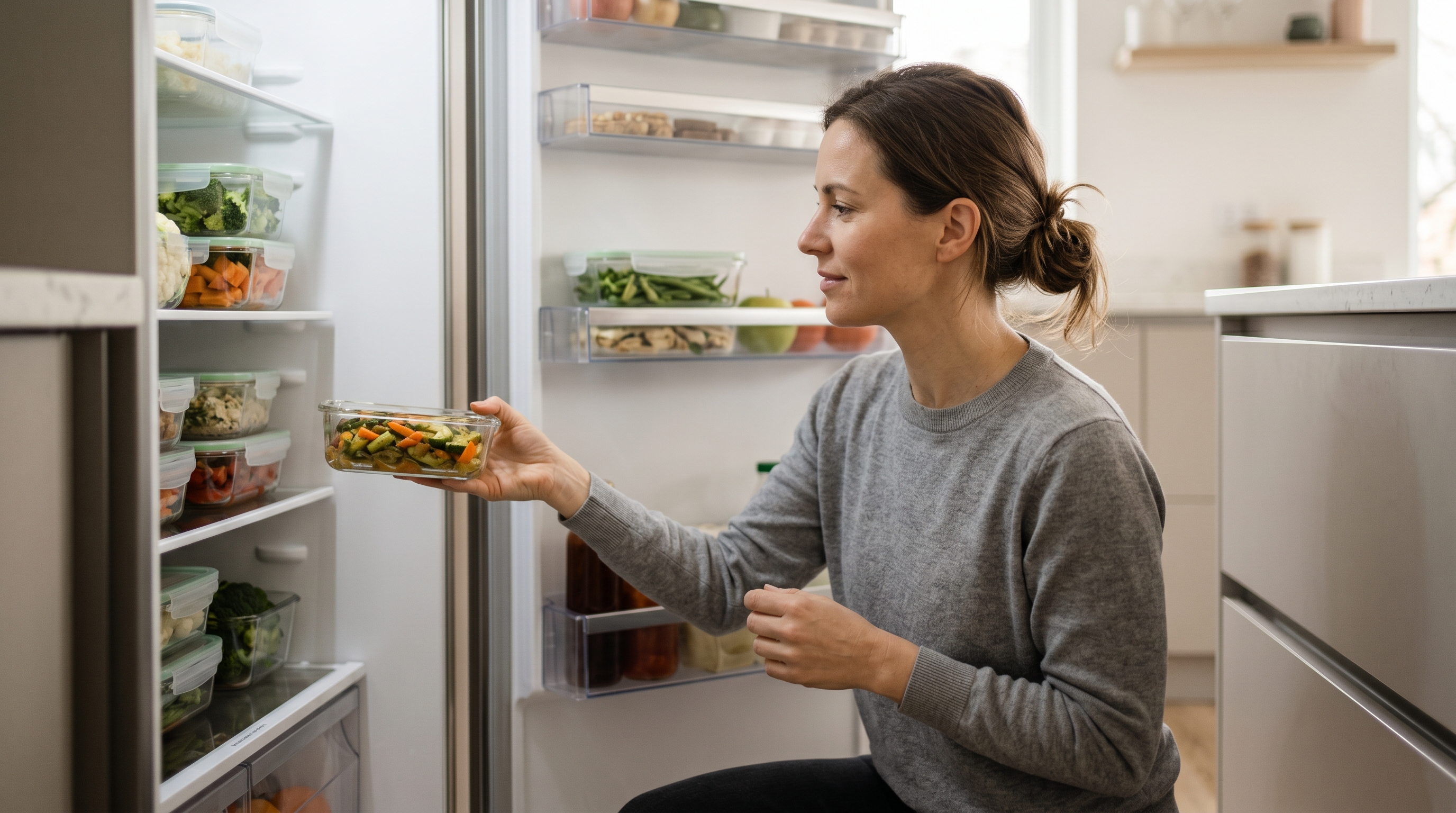
How to Reduce Food Waste at Home: A Fridge-First Framework for Cooking What You Already Have
According to the UN Environment Programme's 2024 Food Waste Index Report, households are responsible for roughly 60 percent of all food waste worldwide, an estimated 1. 05 billion tonnes discarded annually. That is not a supply chain problem. It is a Tuesday night problem, repeated in kitchens everywhere.
Table of Contents
- Why Reducing Food Waste Matters More Than You Think
- The Fridge-First Framework: Five Steps to Waste Less Food
- Shopping Smarter vs Cooking Smarter: Where Waste Actually Happens
- Fridge and Pantry Organization That Changes What You Cook
- Meal Planning Around What You Have, Not What You Wish You Had
- Leftover Recipes and Near-Expiry Cooking: A Practical Decision Guide
- Technology vs Habit: When an App Actually Helps Reduce Waste
- Is Reducing Food Waste Cost Effective? A Household Reality Check
Key Takeaways
| Point | Details |
|---|---|
| Start from the fridge, not the recipe | Cooking from what you have closes the gap between purchase and plate where most waste happens. |
| Organization is a waste-reduction tool | Visible, well-arranged shelves reduce forgotten ingredients, the leading cause of home food waste. |
| Shopping less often can backfire | Bulk buying without a usage system often increases waste rather than cutting it. |
Why Reducing Food Waste Matters More Than You Think
Household food waste is the single largest category of wasted food in most developed countries, accounting for roughly 60 percent of all food waste globally according to the UNEP Food Waste Index Report 2024. That is not a supply chain problem or a restaurant problem. It is your fridge.
The numbers are blunt. The USDA estimates that the average American household wastes between 30 and 40 percent of its food supply. Each kilogram that ends up in a landfill generates methane as it decomposes, a greenhouse gas roughly 80 times more potent than CO2 over a 20 year period (IPCC AR6). Behind every discarded bag of spinach sits embedded water, transport fuel, and farmland that produced something nobody ate.
But the environmental argument, while real, is not what makes most people feel it. What stings is the personal cost. You bought those vegetables with a plan. The plan dissolved into a Tuesday where everyone was tired and someone ordered takeout. By Thursday the peppers are soft and the guilt is familiar.
This is where we find the real leverage. We call it the Spoilage Guilt Loop, and it has three stages:
- Optimistic buying , you shop for the week you wish you had
- Decision collapse , you stare into the fridge, see plenty, and cook nothing from it
- Quiet disposal , food goes in the bin, and the cycle resets on Sunday
One condition where this changes: households that cook from what they already have, rather than from a pre-planned menu, break the loop at stage two. The rest of this article is about how to do exactly that.
For a deeper look at the financial and environmental benefits of reducing food waste, see our post on reduce food waste benefits.
The Fridge-First Framework: Five Steps to Waste Less Food
The single most effective way to reduce food waste at home is to start every cooking decision by looking at what you already own, not at a recipe you wish you could make. Most advice tells you to plan meals first, then shop. That sequence ignores the half-wilted greens and forgotten yogurt already sitting on your shelf. The Fridge-First Framework flips the order.
Here are the five steps, designed as a weekly cycle you repeat rather than a one-time purge:
- **See what you have. ** Open the fridge, the freezer, the cupboard. Take stock honestly. A quick photo works if you want a record.
- **Organize for visibility. ** Move older items forward. Group ingredients that need to be used soon. What you cannot see, you will not cook.
- **Plan meals from existing ingredients. ** Build your next few dinners around what is already there, not around aspirational grocery lists. This is where the framework earns its name.
- **Cook with flexibility. ** Treat recipes as suggestions, not scripts. Swap the broccoli for the zucchini that is about to turn. Adjust.
- **Review and adjust weekly. ** Notice what consistently goes to waste. Change your buying habits based on what you actually learn.
One condition where this changes: if your household has strict dietary requirements across multiple people, step three may need external support to find meals that satisfy everyone while still using what is on hand.
| Traditional Meal Planning | Fridge-First Framework |
|---|---|
| Starts with recipes | Starts with ingredients |
| Shopping list drives meals | Existing food drives meals |
| Waste discovered at cleanup | Waste prevented at planning |
Imagine a household of four where one person is dairy-free and another avoids gluten. Step one still applies.
Shopping Smarter vs Cooking Smarter: Where Waste Actually Happens
Most people assume food waste is primarily a shopping problem, but buying less or making better lists is only part of the solution. According to the USDA, the average American household wastes between 30 and 40 percent of its food supply, and the majority of that loss happens after groceries are already home (USDA, 2023). The real gap is not between the store and the fridge. It is between the fridge and the pan.
Shopping strategies and cooking strategies both reduce waste, but they pull different levers.
Shopping-focused habits:
- Writing detailed lists before going to the store
- Meal planning for the full week
- Buying smaller quantities more frequently
- Avoiding impulse purchases
Cooking-focused habits:
- Checking what you already have before deciding what to make
- Choosing flexible recipes that adapt to available ingredients
- Using older items first
- Treating leftovers as starting points, not afterthoughts
Shopping discipline helps you buy less. Cooking flexibility helps you use what you bought. For most households, the second category carries more leverage because it addresses the exact moment where waste occurs: standing in front of an open fridge with no plan. The two approaches are not in competition. Pairing a tighter shopping habit with a fridge-first cooking habit closes both ends of the waste gap at once.
One condition where this changes: if your household regularly buys large quantities of perishable items on sale, shopping habits become the higher priority intervention. For the typical weeknight cook staring at half a zucchini and some leftover rice, the bottleneck is not what they purchased. It is what they decide to do with it.
Imagine a household that shops carefully every Sunday but by Wednesday has forgotten what they planned. The vegetables are still there. The motivation is not. Starting from what you actually have, rather than what a recipe demands, quietly changes the math on waste.
Fridge and Pantry Organization That Changes What You Cook
A well-organized fridge cuts household food waste by making forgotten ingredients nearly impossible to overlook. Most of that loss starts with items pushed to the back of a shelf, and organization is the simplest structural fix available. Organization is not about aesthetics. It is about visibility.
The principle is simple: if you can see it, you will cook it. First-in-first-out rotation (the same method commercial kitchens use) means newer items go behind older ones every time you unpack groceries. Clear containers replace opaque packaging so you actually notice the half-cup of rice or the last handful of spinach. A designated "use first" zone on the top shelf of your fridge gives near-expiry items a fighting chance.
Here are the habits that make the biggest difference:
- Move older items to the front every time you put groceries away
- Use clear, stackable containers for leftovers and open packages
- Keep a "use first" shelf or bin at eye level in the fridge
- Group similar ingredients together so you can spot duplicates before buying more
- Maintain a running list of pantry staples you always want on hand
- Check your fridge before writing a shopping list, not after
One condition where this changes: if your household cooks from a strict weekly meal plan with pre-portioned ingredients, rotation matters less because everything is already allocated to a specific meal. For everyone else, visibility is the lever that prevents the slow, invisible losses that accumulate across a week.
Imagine a household where two parents cook on alternating nights. Neither knows what the other bought or opened. A shared, visible system solves that quietly. Smart pantry tracking tools work on the same principle, building a staples list over time as you cook and flagging gaps without requiring manual inventory.
Meal Planning Around What You Have, Not What You Wish You Had
Starting with what is already in your fridge eliminates the single biggest source of household food waste: buying ingredients for recipes you never get around to making. The traditional approach (choose recipe, write list, shop, cook) practically guarantees orphaned produce. Flipping that sequence changes everything.
Imagine a household on a Wednesday evening. The fridge holds half a cabbage, some ageing carrots, a block of feta, and a jar of miso pushed to the back shelf. Under the old model, none of that becomes dinner. Under a fridge-first approach, it becomes two or three meals without a grocery run.
| Traditional Planning | Fridge-First Planning |
|---|---|
| Pick recipe, then shop for ingredients | Inventory fridge, then find matching recipes |
| Leftover ingredients accumulate | Existing ingredients get used first |
| Waste happens at the end of the week | Waste is addressed before it starts |
That cabbage and those carrots could become a miso-glazed roasted vegetable bowl. The feta pairs with the remaining cabbage for a quick slaw. The miso stretches into a simple soup base the next day. None of these require a special trip.
The hard part is not cooking. It is seeing the possibilities in a cluttered fridge at 6 PM when you are tired. One condition where this changes: if your household keeps a very small, rotating stock of the same five ingredients, you barely need a system at all. Most households are not that disciplined, which is why tools that identify what is actually in your fridge and suggest recipes from those real ingredients can close the gap between intention and dinner.
Leftover Recipes and Near-Expiry Cooking: A Practical Decision Guide
A three-question triage turns nearly every near-expiry ingredient into something worth eating instead of something destined for the bin. Most food gets thrown away not because it is inedible but because nobody could decide what to do with it fast enough. That is a decision problem, not a freshness problem.
When you find something aging in the fridge, run it through this sequence:
- **Can it anchor a new meal? ** Leftover roast chicken becomes the protein in a rice bowl. Half a block of tofu gets cubed into a stir-fry. If the ingredient can carry a dish, build around it.
- **Can it be a component in something else? ** Wilting greens fold into a frittata. Softening fruit cooks down into a compote for yogurt or oatmeal. Stale bread becomes croutons or breadcrumbs in minutes. The ingredient does not need to star; it just needs a role.
- **Can it be frozen or preserved? ** Overripe bananas freeze perfectly for smoothies. Herb stems blend into pesto. Vegetable scraps collect in a freezer bag for stock.
One condition where this changes: dairy products near their use-by date rarely freeze well in their original form, so they should be prioritized for cooking immediately rather than preservation.
For storage timing, the 2-2-2 guideline is worth remembering: leftovers can sit at room temperature for up to 2 hours, stay in the fridge for up to 2 days, and keep in the freezer for up to 2 months. It is a rough framework, not a law, but it removes the mental math that slows people down. The real bottleneck is not knowing what to do with what you have. Our [fridge-to-table cooking framework](. eu/blog/fridge-to-table-cooking) covers this in more depth.
Technology vs Habit: When an App Actually Helps Reduce Waste
An app reduces food waste only when it removes a decision you were already struggling to make, not when it becomes another system you need to maintain. That distinction matters more than any feature list.
Manual habit-building works. Writing "use first" on containers, keeping a whiteboard of what needs eating, doing a weekly fridge audit before shopping: these are real strategies and they cost nothing. They also require consistency, and consistency is exactly what collapses on a Wednesday night when you are tired and the kids are loud and nobody can agree on dinner. That is where app-assisted workflows earn their place. Not by replacing the habit of looking in your fridge with intention, but by compressing the gap between "I see these ingredients" and "I know what to cook with them."
One condition where this changes: if your household already runs a tight meal-prep routine with planned shopping and batch cooking, an app adds friction rather than removing it. For households without that structure, the right tool works at the specific gap between inventory and decision.
Photo-based fridge scanning tools work at this specific gap. You photograph your fridge, ingredient recognition identifies what is actually in there, and you get recipe suggestions based on those ingredients, your pantry staples, and what your household has liked before. If a suggestion is close but not right, you adjust it conversationally: less spicy, swap the chicken for tofu, skip the cream. The learning matters over time. It is the difference between a tool you use once and a tool that quietly gets better at knowing your kitchen.
If you are evaluating any food waste tool, here is what to look for:
- Does it work from what you already have, or does it generate shopping lists first?
- Does it remember your household's dietary rules without re-explaining?
- Does it suggest multiple options, not just one?
Is Reducing Food Waste Cost Effective? A Household Reality Check
Reducing food waste saves real money for most families, and the savings accumulate week by week rather than arriving as a single windfall. The USDA estimates that the average American household wastes between 30 and 40 percent of its food supply (USDA, 2023), and that translates directly into grocery spending that produces nothing edible.
Imagine a household of four that currently throws out about $30 worth of food each week. That is a wilting bag of salad greens, some leftover rice no one remembered, half a block of cheese that dried out, a few bananas that turned before anyone reached for them. Not dramatic. Just ordinary. Over a year, those unremarkable losses add up to a substantial sum. Now picture the same household cooking from what they already have before buying more.
The savings come from specific, traceable changes:
- Fewer impulse purchases because meals start from existing ingredients rather than new recipes
- Fewer emergency grocery runs when dinner plans fall apart midweek
- More meals pulled from what is already in the fridge, pantry, and freezer
- Less produce spoilage because perishable items get used first, not forgotten
One condition where this changes: households that already cook methodically from a tight weekly plan may see minimal financial improvement, because their waste baseline is already low.
The financial benefit is real but not the whole story. Most people who shift to a fridge-first approach report that the reduction in daily decision fatigue matters as much as the money. Knowing what you have and what to do with it removes a layer of low-grade stress that compounds just like the grocery bills do. Tools that track what is in your kitchen and suggest meals from those ingredients make this shift practical rather than aspirational.
Summary
The Fridge-First Framework works because it treats food waste as a system problem, not a willpower problem. The five steps build on each other: audit what you actually have, organize so perishables stay visible, plan meals around existing ingredients rather than aspirational grocery lists, cook flexibly using base recipes that absorb whatever needs using, and track patterns so the cycle improves over time. Each step reduces the decision fatigue that causes food to quietly expire in the back of a drawer.
Organization creates visibility. Flexible cooking creates options. Pattern tracking creates momentum. Technology, when it earns its place, connects all three without adding friction.
There is a quiet satisfaction in opening your fridge and knowing that almost everything in it will become dinner this week. That is the goal. Tools like FridgeAI exist to make that feeling more common, not more complicated.
Most Food Waste Advice Starts in the Wrong Place The standard guidance to reduce food waste at home begins with shopping lists and meal plans. That gets the sequence backwards. The real leverage point is what is already sitting in your fridge right now, not what you intend to buy next Tuesday.
Frequently Asked Questions
What are five practical steps to reduce food waste at home?
The five most effective steps are: check your fridge before shopping, move older items to the front so they get used first, learn a handful of flexible recipes that absorb whatever ingredients are on hand, treat leftovers as ingredients rather than reheated meals, and freeze anything you will not use within two days. Each step targets a specific point where food typically slips from "usable" to "forgotten," and together they address the root cause of most household waste: buying food without a realistic plan for using it.
What is the 2-2-2 rule for food?
The 2-2-2 rule is a food safety guideline stating that leftovers should not sit at room temperature for more than 2 hours, should be eaten or frozen within 2 days of refrigerating, and will keep safely in the freezer for up to 2 months. Following it removes the uncertainty that leads people to discard food they are not sure is still safe, which makes it a practical waste-reduction tool as much as a safety one. One edge case worth noting: if your fridge runs warmer than the recommended 40°F (4°C), the 2-day window shrinks, and you should treat those items as same-day priorities rather than relying on the standard guideline.
Why is reducing food waste cost effective for households?
Reducing food waste directly cuts grocery spending because every item that reaches the plate instead of the bin is money fully recovered. The USDA estimates that the average American household wastes between 30 and 40 percent of its food supply (USDA, 2023), and even a modest reduction in that figure translates to meaningful savings over a year. One condition where this changes: households that already cook from scratch and shop minimally may see smaller savings, since their baseline waste is already low.
How does a fridge photo app help reduce food waste?
A fridge photo app closes the gap between seeing ingredients and knowing what to cook with them, which is the exact moment most food waste decisions are made. Instead of staring at a shelf and drawing a blank, you get specific recipe suggestions built around what is actually there. This matters most for perishables that spoil within days, where the window between "usable" and "trash" is narrow and decision fatigue is highest. One edge case to consider: these tools work best when your fridge is reasonably organized, since a densely packed or poorly lit shelf can obscure items from the camera and produce incomplete ingredient lists.
Is meal planning or cooking from what you have more effective for reducing waste?
Cooking from what you have reduces waste more reliably than meal planning because it responds to what is actually in your fridge rather than a plan made days earlier. Meal planning assumes your week will go as expected, and it rarely does — which is precisely when planned ingredients go unused and spoil. One condition where this changes: large households with predictable schedules often benefit from structured meal plans because volume purchasing and batch cooking offset the rigidity.
What are the best ways to use up leftovers before they go to waste?
Repurpose leftovers into a different meal rather than reheating the same dish, and the options multiply immediately. Roasted vegetables become frittata filling. Last night's rice becomes fried rice with whatever protein is left. The key shift is seeing leftovers as ingredients, not as yesterday's dinner. Soups, grain bowls, and stir-fries are the most forgiving formats for absorbing odds and ends from your fridge.
How does FridgeAI help with reducing food waste specifically?
FridgeAI analyzes a photo of your fridge using the Claude AI API and suggests three recipes based on what it actually sees, prioritizing ingredients that need to be used soon. It remembers your household's dietary requirements, tracks your pantry staples so suggestions reflect everything you have on hand, and improves its recommendations over time based on what your household has cooked and enjoyed. Your fridge photos are processed for ingredient recognition and then discarded immediately, and one Kitchen subscription covers your whole household so every cook shares the same pantry and recipe history.