3 Ways to Reduce Food Waste at Home: A Problem-First Playbook for Home Cooks
22 June 2026 · Updated 11 August 2026
Discover 3 ways to reduce food waste at home with a problem-first playbook for home cooks. Fix the real causes and start wasting less food today.
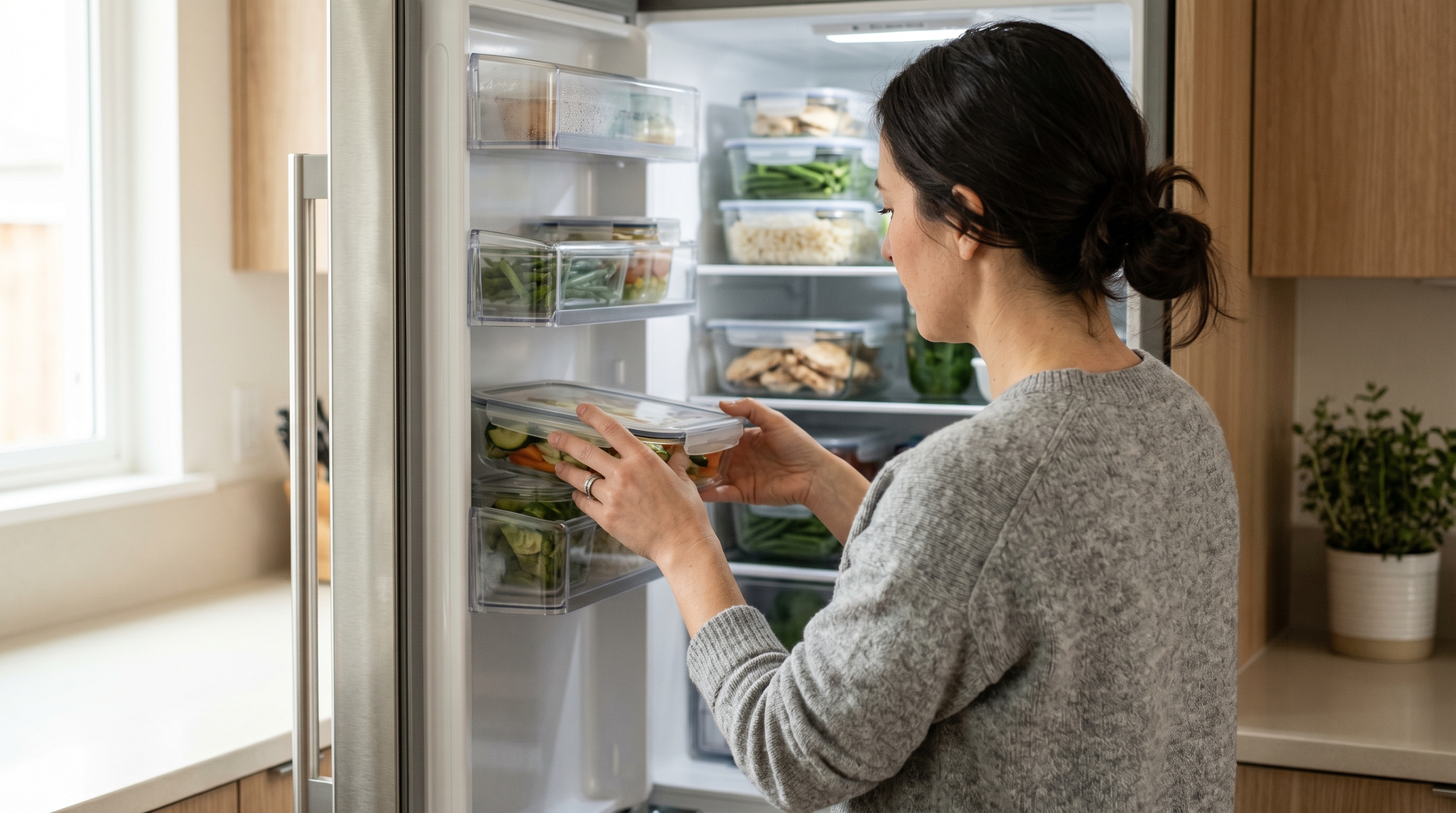
According to the UN Environment Programme's Food Waste Index Report, households generate more food waste than restaurants or retailers in most high-income countries, making the home kitchen the single most impactful point of intervention for reducing food waste globally. Roughly a third of all food produced globally is lost or wasted, and a significant share of that happens in your kitchen.
Table of Contents
- The Real Reason Food Gets Wasted (It Is Not Laziness)
- Way 1: Plan Meals Around What You Already Have
- Way 2: Store Food Correctly to Extend Freshness
- Way 3: Use Ingredient-Based Recipe Tools to Close the Gap
Key Takeaways
| Point | Details |
|---|---|
| Households are the biggest source | UN data shows households generate more food waste than any other supply chain stage in high-income countries. |
| Planning beats willpower | Meal planning around existing fridge and pantry contents reduces waste before food expires. |
| Storage decisions compound quickly | Placing produce in the wrong spot from the moment you unpack groceries accelerates spoilage by days. |
| Decision friction drives waste | The mental effort of matching random ingredients to a meal is a leading reason food goes unused. |
| Technology can close the gap | Ingredient-based recipe tools address the core problem of not knowing what to cook with what is already on hand. |
The Real Reason Food Gets Wasted (It Is Not Laziness)
Decision friction, not indifference, is the real driver of household food waste. You open the fridge, see half a pepper, some leftover rice, and a small jar of miso that has been sitting there for two weeks. You care. You just cannot think of what to make with that combination at 6:30 on a Wednesday.
Household food waste in the United States costs the average family roughly $1,500 per year, a figure driven by three specific and fixable root causes: poor visibility into existing inventory, improper storage that accelerates spoilage, and the decision friction of converting available ingredients into a meal. That number comes from three specific, fixable root causes:
- No visibility into what you actually have. Ingredients get buried, forgotten, or duplicated because nobody tracks what is already in the fridge or pantry.
- Food stored in ways that accelerate spoilage. A tomato in the fridge loses flavor and texture faster than one on the counter. Herbs wilting in a plastic bag never had a chance.
- No easy path from available ingredients to a meal. Translating a random assortment of ingredients into dinner requires energy most people have already spent by evening.
The first of these root causes is exactly what meal planning around your existing fridge and pantry is designed to fix.
Way 1: Plan Meals Around What You Already Have
Starting from what is already in your fridge, rather than from a recipe you found online, eliminates the most common cause of household food waste: buying ingredients that duplicate what is already expiring on the shelf.
The conventional approach works backwards. You pick recipes, write a shopping list, then add new perishables to a fridge that already has perishables quietly going bad. The inversion is simple. Look first, plan second.
Consider a household that opens the fridge on Sunday and finds yoghurt nearing its date, half a bag of spinach going limp, and leftover chicken. They plan three dinners from what they see. The yoghurt becomes a marinade. The spinach goes into a frittata. Nothing reaches the bin.
This works better when you know your pantry. Keeping track of staples like olive oil, soy sauce, and smoked paprika means you can build around perishables instead of buying duplicates.
| Approach | Starts with | Typical waste pattern |
|---|---|---|
| Recipe-first planning | A recipe you want to cook | New perishables crowd out existing ones |
| Fridge-first planning | What you already have | Perishables get used before they expire |
Fridge-first planning demands that you cook with whatever combination is on hand, which sometimes feels improvised. For households with strong flavor preferences or dietary restrictions, that flexibility has limits. But even the best plan falls apart when food spoils before you get to it, which is why storage matters just as much as which ingredients you choose to use first.
Way 2: Store Food Correctly to Extend Freshness
Produce spoils most often not because you forgot about it, but because it was placed in the wrong spot the moment you unpacked the groceries. Improper storage is a leading contributor to the roughly 30 to 40 percent of food wasted at the consumer level.
Small placement decisions add up fast. Wrapping coriander in a damp cloth or standing it upright in a jar of water extends its life well over a week. That is not a hack. That is just how herbs work when they have moisture at the stem and airflow around the leaves.
- Fridge zones matter. Dairy and leftovers belong at the back where temperature stays consistent. Vegetables go in the crisper drawer. Opened coconut milk should be decanted into a sealed jar.
- Some foods do not belong in the fridge at all. Tomatoes lose flavor in cold air. Potatoes and onions last longer in a cool, dark cupboard.
- Airtight containers are not optional for leftovers. Exposure to air accelerates spoilage within hours, not days.
- The freezer is a pause button, not a graveyard. Bread, cooked grains, and stock all freeze well when caught before they decline.
Households in humid climates may find that even correct storage falls short for delicate produce like herbs or berries. In those cases, buying smaller quantities more frequently is a better fix than optimizing storage alone. Even with food lasting longer, there is still a final obstacle: knowing what to cook with whatever combination happens to be on hand.
Way 3: Use Ingredient-Based Recipe Tools to Close the Gap
The gap between having food and actually cooking it is a decision problem, not a knowledge problem. The hard part is staring at half a zucchini, some leftover rice, and a block of feta and turning that into a plan while someone asks what is for dinner.
This is where most waste quietly happens. Not because food spoils from neglect, but because the mental effort of matching random ingredients to a meal exceeds what you have left at 6 PM. A meaningful share of wasted food is food people fully intended to use but never got around to cooking because the decision felt too hard in the moment.
Ingredient-based recipe tools work best when your fridge contains a reasonable variety of ingredients. A near-empty fridge will produce suggestions that feel like a stretch. The tool closes a decision gap; it does not replace a shopping trip.
Consider a household where both adults cook but neither plans consistently. The fridge has ingredients. Nobody has ideas. Leftovers drift toward the back. Fridge photo analysis tools address exactly this friction:
- Photograph your fridge
- Receive three recipe suggestions based on what the analysis identifies
- Tweak conversationally (less spicy, make it vegetarian, skip the dairy)
- Cook
Photos are discarded immediately after analysis. Nothing is stored. For households with multiple cooks, a shared kitchen and pantry feature means both people see the same ingredient picture and cooking history. If your household meal preps in large batches on Sundays, a planning tool matters more than a reactive one.
Summary
Reducing food waste comes down to three connected habits: seeing what you have, storing it so it lasts, and knowing what to cook with it before things go bad. None of these require perfection. They require less friction. When visibility, preservation, and decision support work together, the gap between good intentions and actual results gets smaller.
FridgeAI looks at what is in your fridge right now and suggests three recipes from what it finds. No account needed to start. Take a photo tonight and see what it comes up with.
Frequently Asked Questions
What are the 3 R's for reducing food waste?
The 3 R's are Reduce, Reuse, and Recycle. Reduce means buying and preparing only what your household will eat. Reuse means repurposing leftovers and scraps into new meals or stocks before they spoil. Recycle means composting whatever remains. The order matters because each step downstream recovers less value than the one before it.
What are 5 steps to reduce food waste at home?
Start by auditing what you throw away most often, then build habits around those specific items. The five steps: check what you already have before shopping, plan meals around perishables first, store produce correctly, batch-cook ingredients that are about to turn, and compost what you genuinely cannot use. Single-person households often benefit more from buying frozen produce than from batch-cooking fresh, since portion sizes make fresh batch-cooking impractical.
How does meal planning actually reduce food waste?
Meal planning reduces waste by aligning what you buy with what you will cook within a specific window. A meaningful share of household food loss comes from unplanned purchases that expire before anyone gets to them. Planning does not need to be rigid. Even loosely deciding which perishables to use on which nights cuts spoilage significantly.
Can an app really help reduce food waste?
Yes, if the tool works from what you already have rather than pushing you toward new purchases. Tools that analyze your fridge contents and suggest recipes based on available ingredients address the core problem: not knowing what to make with what is on hand. The households that see the most reduction in waste use ingredient-based suggestions reactively, on the nights when decision fatigue is highest, rather than trying to plan every meal through the tool.
What foods are most commonly wasted at home and why?
Fresh produce, bread, and dairy account for the largest share of household food waste in most Western countries. These items spoil fastest, and households tend to overbuy them relative to how quickly they cook. Leafy greens are particularly vulnerable because they wilt within days. Proper storage helps, but the deeper fix is planning meals that prioritize perishables before reaching for shelf-stable ingredients.