Best Ways to Reduce Food Waste: A Checklist for What Actually Works (and When to Skip It)
18 August 2026
Discover the best ways to reduce food waste at home with a practical checklist of what actually works, and what to skip. Start cutting waste in your kitchen
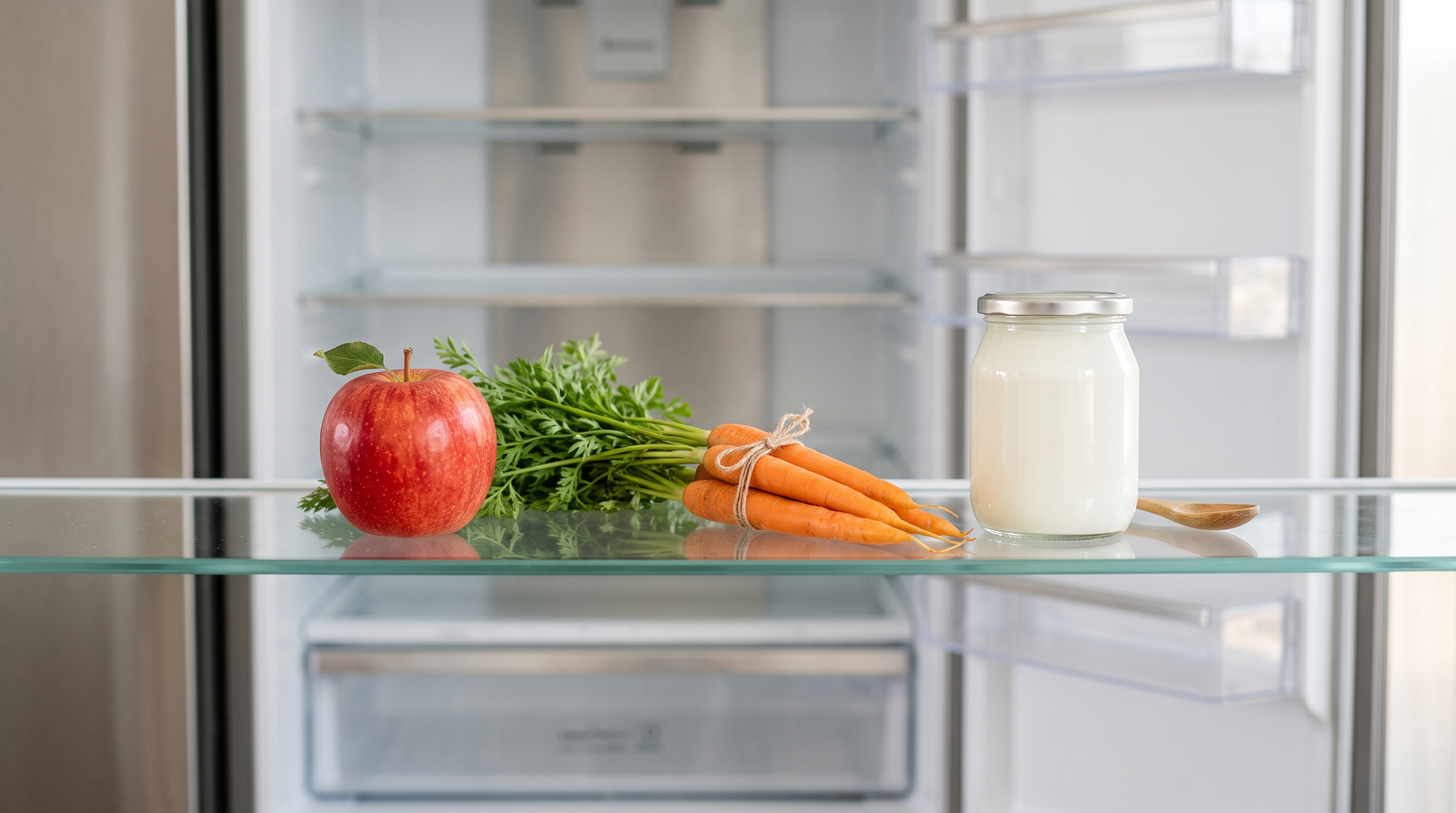
The UN Environment Programme's Food Waste Index Report found that households account for roughly 61% of all food waste across the food service and retail supply chain combined, making the home kitchen the single highest-leverage point for intervention. That makes your kitchen the single highest-leverage place to intervene. Not a restaurant. Not a warehouse. Your fridge.
Table of Contents
- Here Is Where Most Home Cooks Get This Wrong
- The Checklist: Best Ways to Reduce Food Waste and When Each One Applies
- When Visibility Does More Work Than Planning
Key Takeaways
| Point | Details |
|---|---|
| Visibility beats planning | Knowing what you already have is the most reliable lever for reducing household food waste. |
| Most habits fail at the decision moment | Meal planning works when it reduces the nightly decision, not when it adds another task. |
| Inventory before you shop | A quick fridge scan prevents duplicate purchases and is the single highest-return habit change. |
| Fridge-first cooking outperforms rigid plans | Cooking from what is closest to expiring cuts waste faster than any organizational system. |
| Composting is not prevention | Composting handles waste after it happens; reducing it requires acting before food expires. |
Here Is Where Most Home Cooks Get This Wrong
The most widely held belief about the best ways to reduce food waste is that better meal planning would leave nothing to waste. For most households, the real bottleneck is not planning but visibility. You cannot cook what you have forgotten you own, and no plan survives a Wednesday when someone works late.
Planning implies knowing in advance what you will want to eat on Thursday. It assumes stable energy, predictable schedules, and a household where nobody changes their mind. That half-used jar of miso and some wilting spinach do not fit neatly into a weekly grid. They fit into a question: what can I actually make with this, right now?
The correction is straightforward. Cooking from what you already have is more durable than any planning system. A fridge-first approach works because it starts from reality, not intention. The Fridge-First Checklist is a conditional framework for evaluating each food waste reduction habit by when it applies and when to skip it, based on how your household actually cooks rather than how it plans to cook, and it reflects a consistent finding: households that cook reactively from visible inventory waste significantly less than those who follow aspirational weekly plans.
| Approach | Assumes | Breaks when |
|---|---|---|
| Weekly meal plan | Stable schedule, known preferences | Someone works late, kids refuse the menu |
| Fridge-first cooking | You can see what you have | Fridge contents are invisible or forgotten |
One condition where this changes: households with very young children or strict medical diets sometimes need rigid advance planning because substitution carries real consequences. For everyone else, the pattern that actually reduces waste is not "plan better." It is "see clearly," and the checklist below shows exactly which tactics make that possible.
The Checklist: Best Ways to Reduce Food Waste and When Each One Applies
Each item on this checklist has a specific condition under which it earns its place and a condition under which it creates more friction than it solves. Matching the tactic to your actual kitchen situation is what separates habits that stick from habits that collapse by day four.
FIFO rotation (first in, first out)
- Apply when: you buy in bulk or have a deep fridge where older items get buried behind newer ones
- Skip when: your fridge is small and you cook daily, because you can already see everything at a glance
- The real cost of skipping it in a deep fridge: that half-block of feta slowly liquefying behind three yogurt containers
Portion sizing before you shop
- Apply when: your household has predictable weekly schedules and consistent headcounts
- Skip when: your week is unpredictable, people eat out without warning, or appetites shift constantly
- One condition where this changes: households with young children, where appetite swings make pre-portioning almost useless
Freezing surplus
- Apply when: you batch cook or buy perishables in quantity, like a family pack of chicken thighs
- Skip when: your freezer is already a graveyard of unlabelled containers from three months ago
- The honest prerequisite: freezing only works if you label, date, and actually defrost things. Most people complete the first step and abandon the rest.
Keeping a pantry or staples list
- Apply when: you cook regularly from scratch and want to avoid buying a second jar of smoked paprika
- Skip when: you rarely reach for pantry staples before they expire anyway
This is where tools that track what you already have start to matter, and the next section explains why visibility is often the more powerful lever than any checklist item on its own.
When Visibility Does More Work Than Planning
Knowing what is actually in your fridge right now prevents more waste than any weekly meal plan for households that cook reactively. That claim sounds counterintuitive, because planning sounds responsible. Visibility, though, is what catches the zucchini before it turns to mush. The gap between what people own and what they actually cook is the primary driver of household food loss, a pattern observed consistently across households that rely on weekly meal plans rather than real-time fridge visibility.
Imagine a household that meal plans every Sunday. By Wednesday, the plan has drifted. Someone worked late. Someone wanted something lighter. The chicken thighs bought for Thursday's recipe sit untouched until they quietly expire. The plan was fine. Life was not.
Now contrast that with a fridge-first approach: you open the fridge, see what is there, and cook from that reality. No drift, because there was no fixed trajectory to drift from. The decision becomes simpler, faster, and grounded in what actually needs to be eaten.
One condition where this changes: if your household has strict dietary needs that require advance ingredient sourcing, pure visibility without some planning layer will leave gaps. For most households, the sequence matters more than the system:
- See what you have before deciding what to cook, not after
- Prioritize ingredients closest to expiring as the starting constraint for tonight's meal
- Skip the rigid weekly plan if your household rarely follows it past day three
This is where fridge-aware tools earn their place. FridgeAI, for example, uses the Claude AI API to analyze a photo of your fridge and suggest three recipes based on what it actually sees. Not what you planned to buy. Not what a generic database assumes you own. What is there, right now, aging quietly on the middle shelf.
Summary
No single approach to reducing food waste works for every kitchen. The strategies that stick are the ones matched to how your household actually cooks, not how it aspires to cook. Visibility beats planning almost every time: knowing what you have matters more than scheduling what you will buy. If one idea from this checklist fits your routine, start there. Skip the rest without guilt. For a broader look at why food waste happens and what actually changes it, the pillar post on reducing food waste covers the full picture.
If you want to put the visibility principle into practice immediately, FridgeAI lets you photograph your fridge and get recipe suggestions based on what is actually there, so the gap between what you own and what you cook closes before anything expires.
Frequently Asked Questions
What is the single best way to reduce food waste at home?
Cooking from what you already have, rather than shopping for new recipes, eliminates the most waste through a single behavior change. According to FridgeAI's experience, the most common failure point is not laziness but the invisible gap between what people own and what they remember they own. Starting from your fridge reverses that pattern entirely. If you only change one habit, make it this: open the fridge before you decide what to cook, not after.
How do I get started with reducing food waste if I have tried before and it did not stick?
Start with one meal per week cooked entirely from ingredients already in your kitchen. Previous attempts usually fail because they demand too many simultaneous habit changes. Pick the meal where you feel the most decision fatigue, typically a weeknight dinner, and commit to using what is on hand for that one slot. One condition where this changes: if your household has strict dietary constraints, a tool that remembers those rules removes the need to re-solve the puzzle each time, which makes the habit far more likely to hold.
Does meal planning actually reduce food waste?
Meal planning reduces waste only when the plan reflects what you already own, not just what sounds appealing. Plans built around aspirational recipes often generate surplus ingredients that spoil before their second use. The most effective version starts with a fridge inventory and works outward. Batch-cooking households that consume everything they prep can plan recipe-first without the same spoilage risk.
What is the best approach to reducing food waste for a busy household?
Visibility is the best approach for busy households, and the reason is specific: it removes the decision-making load that causes both overbuying and forgotten ingredients. Based on FridgeAI's experience, households where both adults work and nobody checks the fridge before shopping consistently buy duplicates, forget leftovers, and lose produce in the back of the crisper. Simply photographing the fridge before shopping, or using a tool that tracks what is there, changes the entire cycle without adding a planning burden.
How does knowing what is in your fridge help reduce food waste?
It removes the guesswork that causes both overbuying and forgotten ingredients. When you can see your inventory clearly, meals naturally form around what needs to be used first, which is the core mechanism behind every effective food waste reduction habit. One condition where this changes: households that share a fridge across multiple people with different schedules may need a shared log or shared tool, because individual visibility does not capture what a housemate already used or moved.