Easy Dinner Recipes: A Step-by-Step Approach to Cooking What You Already Have
6 July 2026 · Updated 11 August 2026
Stop wasting groceries. These easy dinner recipes give you a clear step-by-step approach to turning what's in your fridge into a real meal tonight.
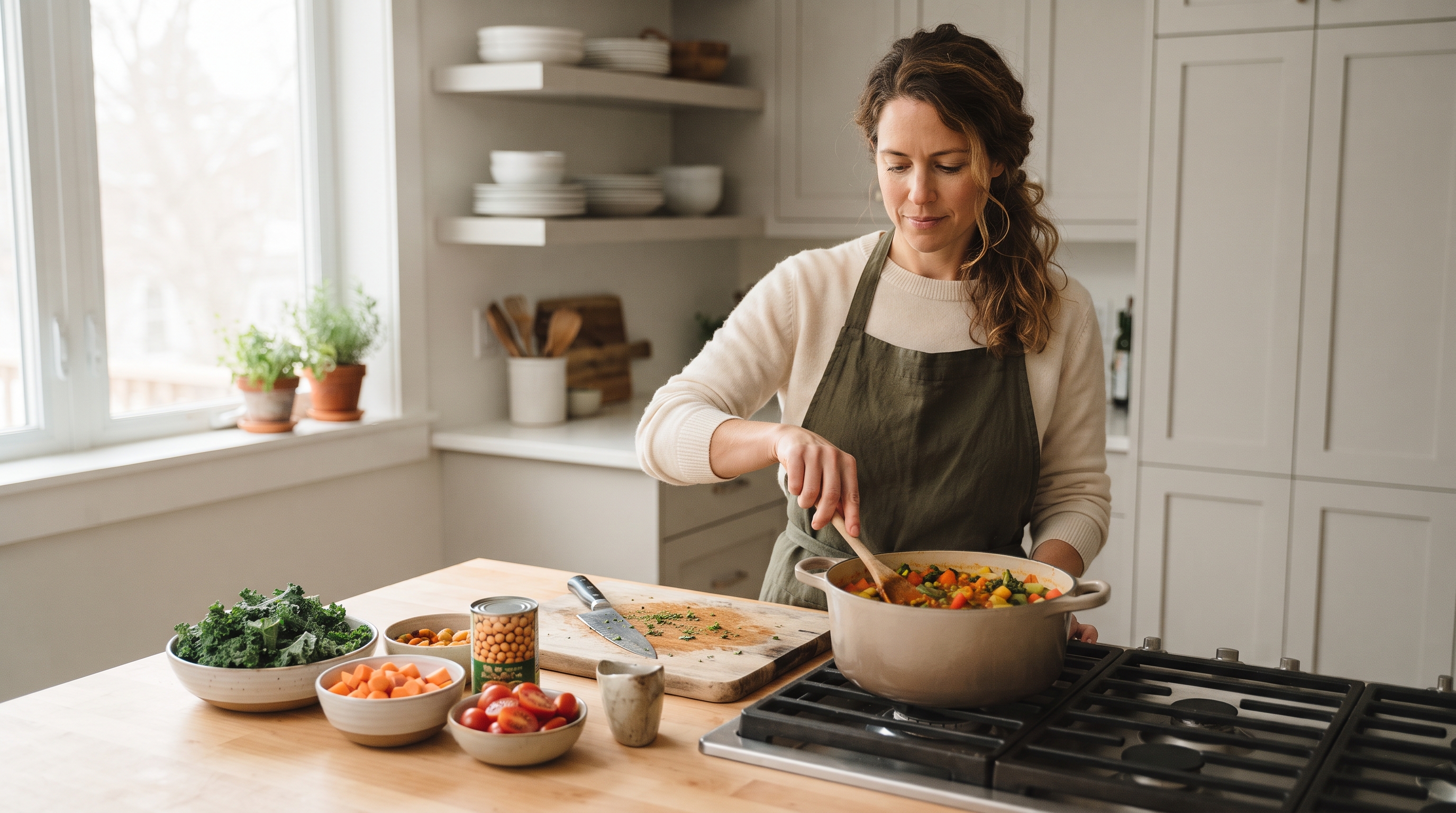
According to the USDA Economic Research Service, food waste accounts for 30 to 40 percent of the U.S. food supply, and a significant share involves perishable ingredients bought with dinner in mind but never cooked. The problem is rarely a lack of food. It is a lack of a clear next step between opening the fridge and putting something on the table.
Table of Contents
- Why Easy Dinner Recipes Feel Hard (Even When Your Fridge Is Full)
- Step 1: Read Your Fridge Before You Search for a Recipe
- Step 2: Match What You Have to a Realistic Weeknight Format
- Step 3: Remove the Decision from the Equation
Key Takeaways
| Point | Details |
|---|---|
| Decision fatigue is the real obstacle | The hard part is choosing, not cooking. |
| Start with what you have | Reading your fridge first cuts waste and narrows options. |
| Format beats recipe | Picking a cooking shape absorbs whatever ingredients you have. |
| Constrained suggestions help | Three options feel like a conversation; forty feel like a grocery aisle. |
| Healthy dinners are often faster | Vegetables, grains, and lean proteins cook quickly by nature. |
Why Easy Dinner Recipes Feel Hard (Even When Your Fridge Is Full)
Easy dinner recipes feel hard because choosing what to cook is a cognitive task that compounds across the week, not because the cooking itself is difficult. The real bottleneck is not a shortage of recipes but the absence of a filter, a way to narrow infinite options down to what is actually cookable tonight with what you already have.
You know the loop. Open the fridge. Stare at the shelves. Close it. Open it again. The chicken thighs are still there, the half-used jar of salsa is still there, and the wilting cilantro is still judging you. The problem is that your brain is trying to cross-reference ingredients, dietary needs, time constraints, and household preferences simultaneously, with no structure to lean on.
Imagine a parent who finishes work at 5:30, picks up a child at 5:45, and walks into the kitchen at 6:10 with forty minutes before someone melts down. That parent does not need 200 pinned recipes. They need three options that match what is already in the house.
Decision fatigue around dinner is cumulative. Monday's choice feels fine. By Thursday, it is unbearable. The fix does not start with a recipe search. It starts with a deliberate look at what is already sitting in your fridge.
Step 1: Read Your Fridge Before You Search for a Recipe
Reading your fridge with intention is the first step toward easy dinner recipes, and it works better than opening a search engine. Most people do this backward: they scroll through recipes first, check whether they have the ingredients, then feel defeated. Flip it.
Open the fridge and look with intention. Here is what to notice:
- What is about to turn. That wilting pepper, the soft spinach, the yogurt nearing its date. These lead tonight's meal.
- What is abundant. Six eggs, a full block of cheese, leftover rice. These are your foundation.
- What pantry staples are on hand. Olive oil, soy sauce, miso, smoked paprika. These turn plain ingredients into something worth eating.
Consider this scenario: half a block of tofu, a wilting bell pepper, three eggs, and leftover rice. That is already two or three quick and easy meals: fried rice, a scramble, or a stir-fry with miso glaze. The ingredients were never the problem. The reading was.
One condition where this changes: if your fridge is genuinely bare, a grocery run is the honest answer. Once you know what you have, the next move is matching those ingredients to a format that fits the time and energy you actually have tonight.
Step 2: Match What You Have to a Realistic Weeknight Format
Choosing a cooking shape rather than a specific recipe is the fastest path to a simple dinner idea once you know what ingredients you have. This is the Format-First Method: instead of searching "chicken thigh recipes" and scrolling past forty options, you pick a format and pour your ingredients into it.
Formats are structural. They absorb whatever you have. Recipes are specific. They demand what you lack.
Here are four weeknight formats that work with almost anything:
- Stir-fry. Any protein, any vegetable, a sauce, heat. Done in under fifteen minutes. Absorbs odds and ends better than any other format.
- Grain bowl. A cooked grain base, roasted or raw vegetables, a protein, a dressing. Forgiving on proportions and easy to split across dietary needs.
- One-pan roast. Root vegetables, a protein, olive oil, salt. Hands-off cooking time lets you do something else entirely.
- Frittata. Eggs plus whatever needs using up. Cheese helps but is not required.
One condition where this changes: if your available ingredients are almost entirely carbohydrate, format-first thinking stalls because most formats assume at least one vegetable or protein. In that case, a pantry-supported pasta with canned tomatoes and spices is your fallback.
Healthy easy dinner recipes that are quick almost always follow one of these formats by default. They are structurally fast, not just labeled "healthy" because someone removed the butter. That said, repeating the same four shapes week after week can flatten variety, and households with strong flavor preferences may find the approach feels mechanical without occasional recipe exploration to refresh the rotation.
Step 3: Remove the Decision from the Equation
Reducing how much active deciding you do each night is the goal of this final step, because generating every option from scratch is what makes even a simple dinner feel hard. The problem was never your cooking ability. It was being your own menu planner, sous chef, and critic simultaneously.
A constrained set of suggestions changes the dynamic entirely. One option feels like a command. Forty feels like a grocery store aisle. Three feels like a conversation where someone who knows your kitchen is offering ideas you can actually say yes to.
Based on FridgeAI's experience, households that receive three targeted suggestions rather than an open-ended list follow through on cooking at a meaningfully higher rate. After analyzing what is in your fridge, the tool returns three recipe suggestions. From there, the interaction is conversational:
- "Less spicy" adjusts heat levels across the recipe
- "More garlic" does exactly what you would expect
- "Make it vegetarian" swaps the protein without losing the structure of the dish
One condition where this changes: if your fridge is nearly empty, even a smart tool can only work with what exists. Two eggs and a lime will narrow any system's options regardless of sophistication.
A tool that narrows choices is genuinely useful on tired weeknights, but it also means ceding some spontaneity. Cooks who enjoy browsing and experimenting may find a constrained suggestion set feels limiting rather than freeing. The approach works best for households where the goal is a reliable, low-friction meal. Based on FridgeAI's experience, a taste profile built over repeated use sharpens suggestions without requiring preference surveys. You just cook, and the next round of suggestions reflects what you actually chose.
Summary
The path to easier dinners follows three steps: read what you actually have, match those ingredients to a cooking format that fits your energy, and strip away the decision overhead that makes the whole process feel harder than it is. More recipes will not solve the problem. A better filter will. The quietest wins in any kitchen are the nights where you just cook something good, without the twenty minutes of staring and scrolling that came before.
FridgeAI is built around that idea. You can try it free with no account required, and the full fridge-to-table framework is covered in the broader guide on cooking from what you have.
Frequently Asked Questions
What makes a dinner recipe genuinely easy on a weeknight?
A recipe is genuinely easy when it requires no special shopping trip, uses five or fewer main ingredients you already have, and takes under 30 minutes of active cooking time. The real test is whether you would actually make it at 7 PM on a Wednesday. One condition where this changes: cooking for someone with multiple dietary restrictions may require substitution research that adds significant time and mental load.
How do I come up with easy dinner ideas when I have no inspiration?
Start by opening your fridge and naming three ingredients out loud. That constraint is more useful than scrolling through hundreds of recipes because it narrows the field immediately. Most people stall not from lack of skill but from too many options. One condition where this changes: if your fridge is nearly empty, a well-stocked pantry with rice, pasta, canned beans, and spices can still anchor a solid meal.
What are the best easy dinner recipes for busy weekdays?
Sheet pan meals, stir-fries, and pasta dishes built from whatever vegetables and protein you have on hand consistently rank as the fastest weeknight options, based on FridgeAI's experience tracking which formats households actually complete on busy nights. They share a pattern: one cooking method, flexible ingredients, minimal cleanup. The best weekday recipe is not a specific dish but a format you can repeat with different ingredients each time.
Can healthy easy dinner recipes actually be quick?
Yes, most healthy dinners are faster than their less healthy counterparts because vegetables, grains, and lean proteins cook quickly. A salmon fillet with roasted broccoli takes about 15 minutes. Lentil soup needs 25. The misconception that healthy cooking is slow comes from elaborate meal-prep content, not from the cooking itself. One condition where this changes: recipes requiring dried beans or long-simmered bone broth genuinely need hours.
How does FridgeAI help with easy dinner recipes?
FridgeAI analyzes a photo of your fridge using the Claude API, identifies what you have, and suggests three recipes based on those actual ingredients. It remembers your household's dietary requirements, pantry staples, and equipment, so every suggestion is something you can realistically cook tonight. The co-chef feature lets two cooks share the same kitchen history. Your fridge photo is discarded immediately after analysis.